

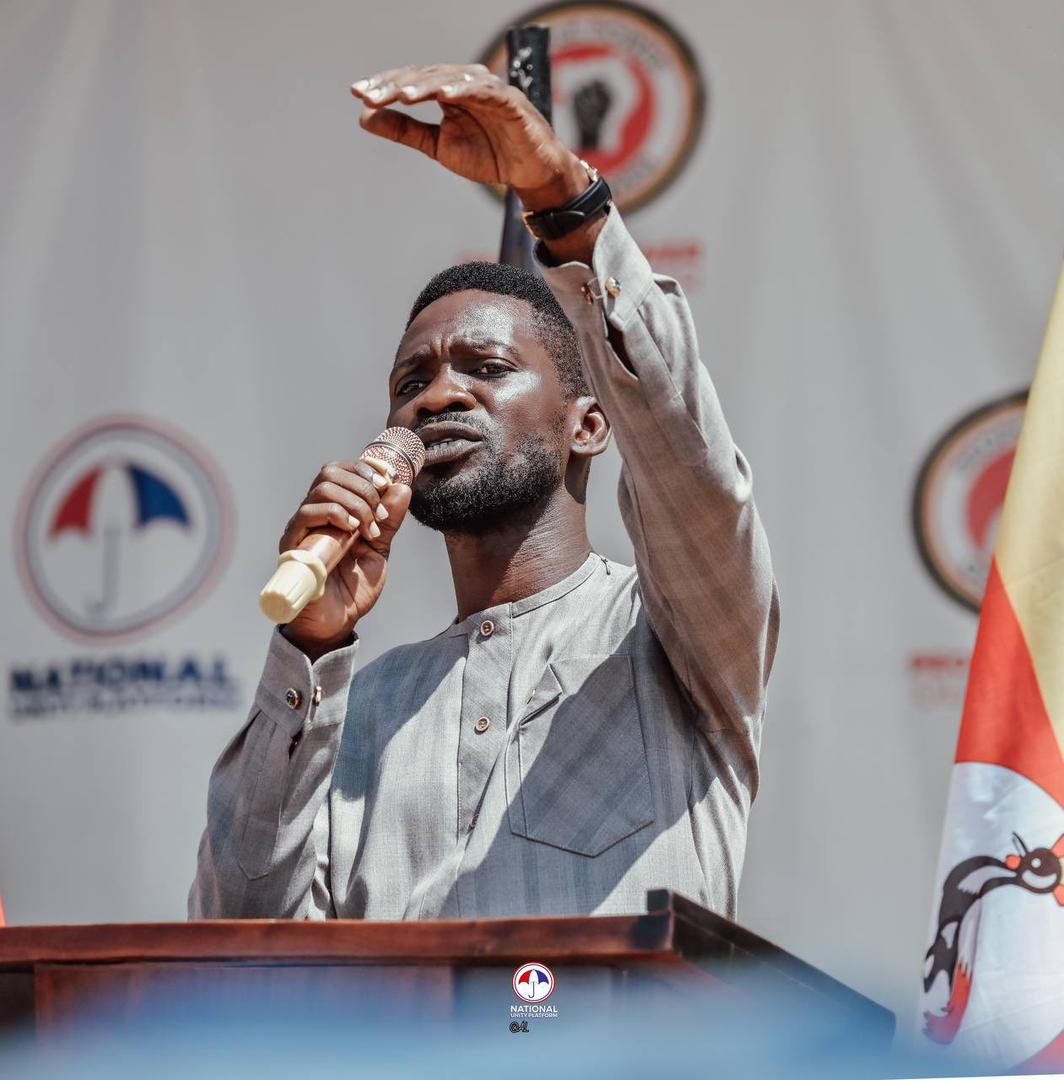
The ruling National Resistance Movement (NRM) has flatly dismissed the National Unity Platform (NUP) President’s recent high-profile engagements with international allies, labeling them "inconsequential" to Uganda’s internal political landscape.
This comes months after the NUP leader exited the country following a period in hiding, later resurfacing to announce a global tour aimed at addressing what he termed "concerning freedom and democratic challenges" back home.
Before his departure, the NUP President emphasized that his mission was to seek "deliberate ways to deal with the system," through "meaningful talks with allies of change."
However, the NRM’s Director for External Affairs, Rtd. Maj. Pollar Awich, maintains that the opposition’s efforts to sway foreign partners will yield little against a "tested" government.
"The impact is there, but the gravity of it is questionable," Awich stated during a press briefing on Monday.
"We have an advantage because our relations with foreigners are tested. You cannot deceive foreigners about us. While NUP would be telling our friends their hopes, these partners know us through long-standing, verified relations. We saw the EU here; they compared the facts against NUP’s intentions."
Awich further argued that the political dynamics of the diaspora mirror those at home, suggesting that external mobilization does not inherently shift the balance of power.
"The mobilization abroad does not worry the NRM. The Ugandans abroad are a reflection of Ugandans back home—even the percentage of support in elections here is the same out of the country. Any mobilization for NUP is inconsequential unless we ourselves make mistakes. States are not judged by individual occurrences; they are judged on what happens when such things occur. We bother about the internal more."
Despite the ruling party’s confidence, political scholars suggest that the NRM may be downplaying a slow but potent strategy.
Dr Gerald Werikhe, a prominent political analyst, noted that while international pressure might not send immediate "chills" through the state apparatus, it serves as a critical tool for reducing local suppression and building cadre networks.
"It’s not new and it has happened before," Dr Werikhe explained. "The objective could be to increase the cost of repression. It could lead to sanctions or eventually influence a split within a ruling group, creating cracks in the establishment. When an opposition leader moves out of the country, citizens begin to question if the system itself is failing."
Werikhe acknowledged that while these diplomatic maneuvers often take time to materialize into "drastic consequences," they require "strategic engagement and thinking" rather than expecting automatic success.
He warned that if international allies remain tethered to the incumbent for geopolitical reasons, the opposition's efforts might stall, but he maintained that external mobilization remains a "supportive arm" for those seeking change.
As the NUP continues to court foreign governments and human rights entities, the NRM remains steadfast, asserting that foreign allies understand how states function and will not be easily swayed by "lies."
For now, the battle for Uganda’s political future continues to play out as much in the corridors of international diplomacy as it does on the streets of Kampala.
